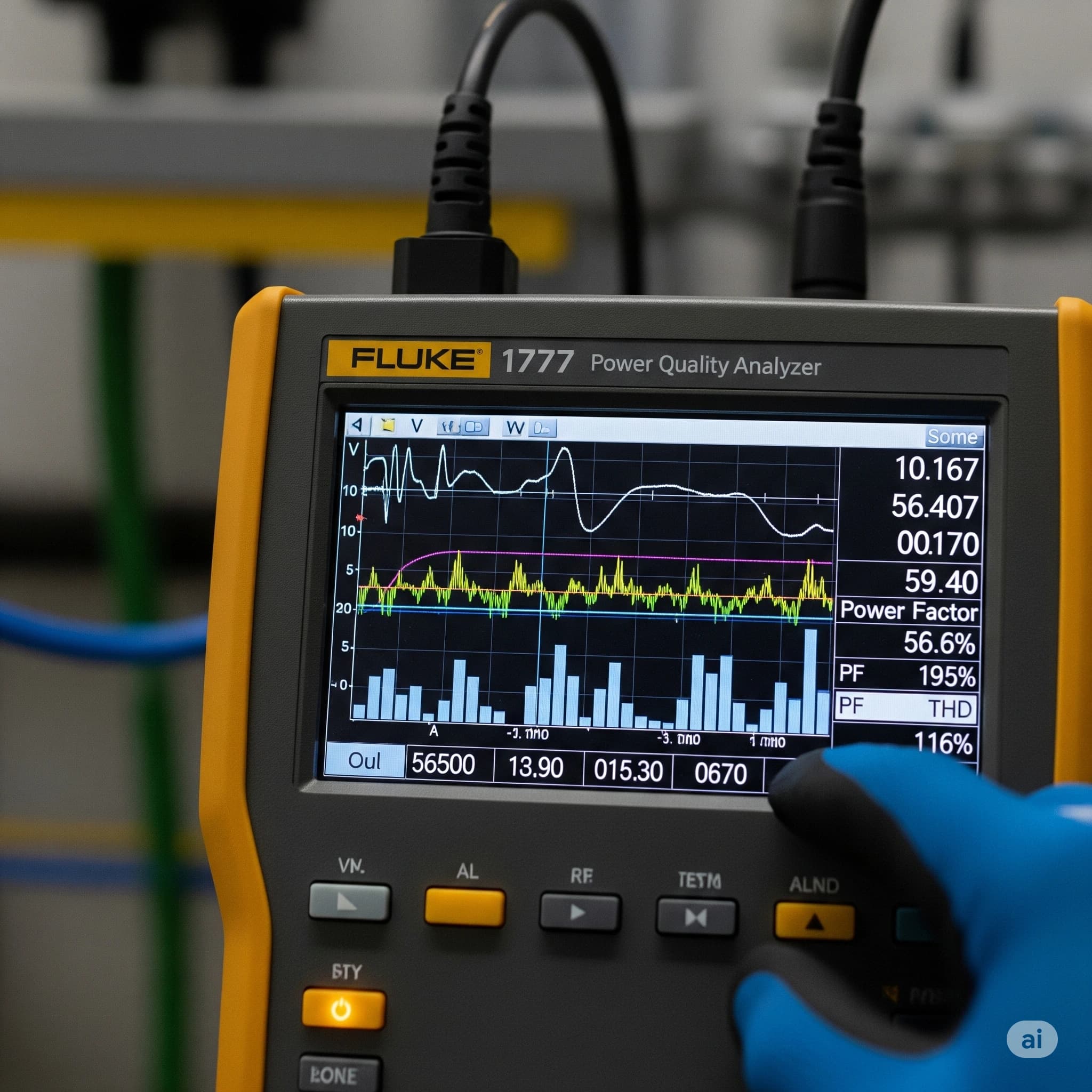
Power Quality Analysis
Advanced electrical diagnostics designed to evaluate system stability, energy efficiency, harmonic distortion, and power integrity across industrial and commercial facilities.
Key Features
- Total Harmonic Distortion (THD) analysis for identifying non-linear load interference
- Comprehensive event detection including voltage sags, swells, interruptions, and rapid voltage changes (RVC)
- Advanced load and energy profiling with power factor, active/reactive power tracking
- Phase unbalance and flicker measurement for compliance verification
- Long-term high-resolution data logging for intermittent fault identification
Benefits
- Optimize overall electrical system performance and efficiency
- Reduce energy waste and lower carbon emissions
- Prevent costly equipment damage caused by harmonics and voltage instability
- Ensure regulatory compliance and avoid utility penalties
- Improve system reliability by identifying hidden electrical stressors
Applications
- Heavy Industry & Mining Operations
- Critical Infrastructure (Hospitals & Data Centers)
- Energy Optimization & Power Factor Correction Projects
- Post-Installation Electrical Commissioning
- Commercial & Large Residential Complexes
- Motor Drives & Process Plants
- Renewable Energy Integration Assessments
- Electrical Distribution & Grounding Validation
Technical Standards & Compliance
- •Power quality assessments aligned with IEC and IEEE standards
- •Utility-grade harmonic and transient analysis methodologies
- •Power factor and harmonic compliance benchmarking
- •Verification against equipment manufacturer tolerances
Strategic Benefits
- •Improved electrical efficiency and reduced infrastructure stress
- •Lower operating costs through energy optimization
- •Reduced carbon footprint via cleaner power delivery
- •Protection of sensitive assets such as PLCs and VFDs
- •Long-term reliability through predictive diagnostics
System Optimization
Power Quality Analysis ensures electrical systems operate efficiently by minimizing losses caused by harmonics, imbalance, and unstable supply conditions.
- •Optimize load balancing
- •Improve power factor performance
- •Reduce unnecessary energy draw
- •Increase equipment operating efficiency
Reliability & Compliance
Detailed diagnostics help facilities meet utility requirements while reducing risks associated with unstable electrical environments.
- •Prevent voltage-related equipment damage
- •Avoid utility penalties
- •Support regulatory compliance
- •Improve operational continuity
Frequently Asked Questions
What is power quality analysis?
Power quality analysis measures your electrical supply characteristics — voltage stability, harmonic distortion, power factor, and transient events — to identify conditions that damage equipment or waste energy.
How does poor power quality damage equipment?
Voltage sags, swells, harmonics, and transients stress motors, variable speed drives, and sensitive electronics, shortening their lifespan, increasing heat generation, and causing nuisance tripping and unplanned downtime.
How long does a power quality study take?
A typical study involves monitoring your electrical system over 7–14 days to capture all operating modes and load cycles. We then analyse the data and deliver a report with prioritised recommendations.
Complementary Engineering Services
Integrated diagnostic technologies that strengthen findings, validate root causes, and provide a complete reliability engineering solution.
Battery Health Assessment & UPS Integrity
Power Quality disturbances often originate from or impact DC backup systems. We perform advanced battery diagnostics to ensure backup reliability during electrical instability and outages.
- Ohmic Resistance & Voltage Testing
- Battery State of Health (SoH) Profiling
- Lead-Acid & NiCd Battery Capacity Validation
- Charger Ripple & Battery Temperature Correlation
- UPS Backup Reliability Assessment
Earthing & Grounding System Optimization
Grounding deficiencies create electrical noise, instability, and hidden circulating currents. We assess earthing topology to improve reliability and protect sensitive systems.
- Ground Loop Detection
- Neutral-to-Earth Voltage Analysis
- Electrical Noise Path Investigation
- TN-S / Grounding Configuration Audits
- Electrical Interference Reduction
Engineering Audit & Technical Compliance
Detailed engineering verification ensures electrical installations follow best practices and avoid hidden inefficiencies that contribute to poor power quality.
- Single-Core Installation Verification
- Magnetic Material Compliance Checks
- Bonding & Cable Routing Validation
- Load Balancing & Phase Alignment
- Three-Phase Efficiency Assessment
Integrated Condition Monitoring
Combining Power Quality Analysis with complementary diagnostics creates a complete root-cause reliability strategy.
- Infrared Thermography Correlation
- Transformer Oil Analysis (DGA)
- Harmonic Heat Validation
- Breaker & Busbar Thermal Verification
- Cross-Diagnostic Reliability Analysis