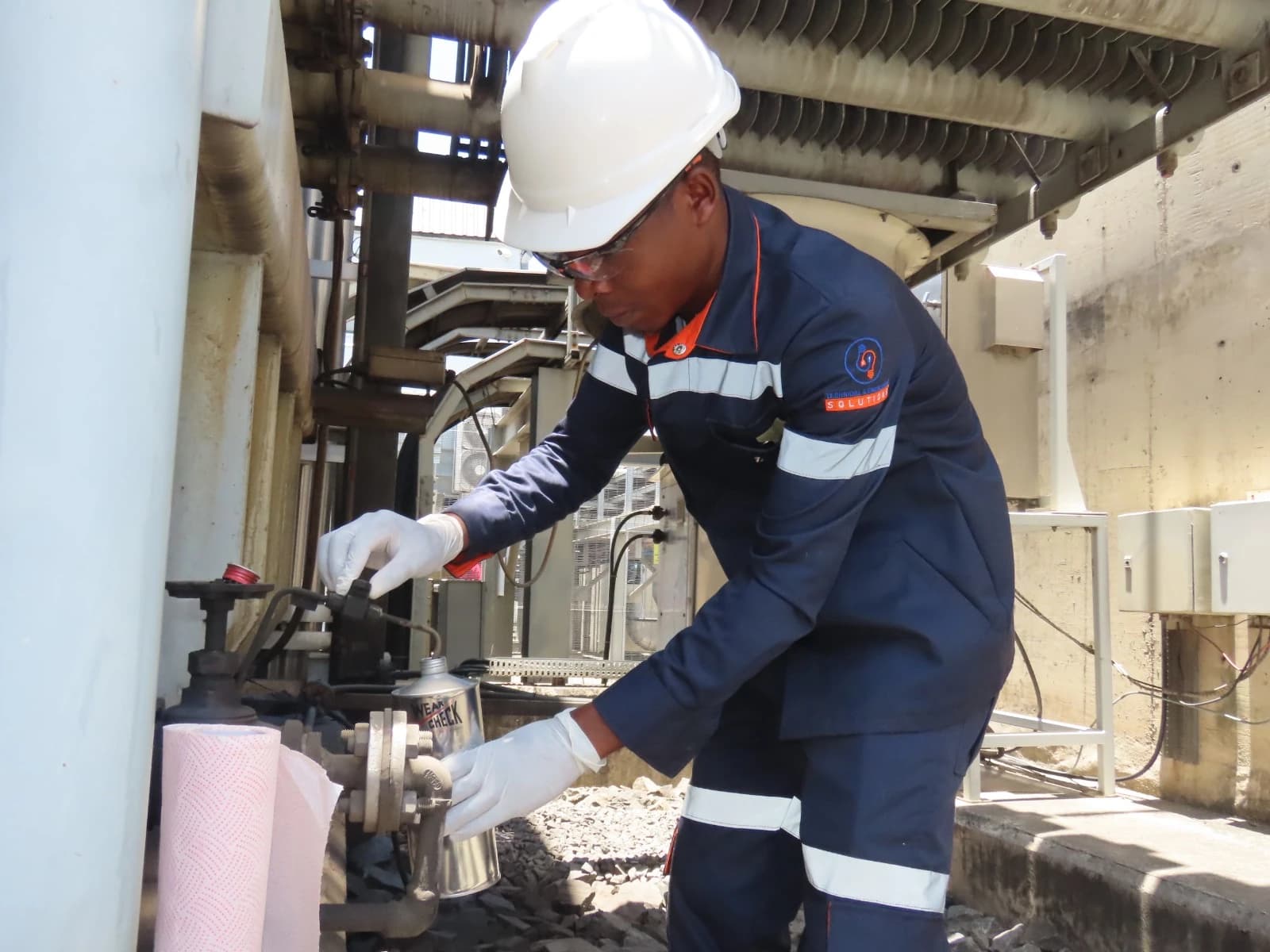
Oil Condition Monitoring
Advanced lubricant diagnostics and transformer oil analysis designed to identify contamination, internal wear, dissolved gases, and fluid degradation before critical equipment failure occurs.
Key Features
- On-site portable Dissolved Gas Analysis (DGA) using GE Transport X2
- Laboratory-grade transformer oil diagnostics within 30 minutes
- Specialized contamination-free oil sampling using glass syringes and tins
- WDL49 industrial oil sampling kits for rotating machinery
- Heavy-duty live oil extraction hardware for energized equipment
- Global logistics and expert engineering interpretation of laboratory results
Benefits
- Immediate transformer fault risk assessment
- Faster diagnostic turnaround through localized sampling infrastructure
- Condition-based maintenance for oils and lubricants
- Reduced downtime through early contamination detection
- Improved asset reliability and lubricant lifecycle optimization
- Access to global laboratory standards with local engineering support
Applications
- Power Utilities & Transformer Substations
- Mining Equipment & Remote Power Assets
- Industrial Gearboxes & Hydraulic Systems
- Manufacturing Plant Lubrication Systems
- Compressors & Rotating Machinery
- Transformer Commissioning & Post-Repair Validation
- High-Voltage Asset Monitoring
- Heavy-Duty Earthmoving Equipment
WearCheck Tanzania Access
Oil & Transformer Condition Monitoring in Tanzania
TES provides local oil condition monitoring and transformer oil analysis services in Tanzania in partnership with WearCheck South Africa. TES manages the local engineering interface, sampling coordination, logistics support, and practical maintenance recommendations, with laboratory analysis supported through WearCheck's specialist laboratory network.
Technical Standards & Diagnostic Integrity
- •Portable Dissolved Gas Analysis (DGA) for transformer diagnostics
- •Contamination-controlled sampling methodology
- •Live-system oil extraction using industrial sampling hardware
- •Engineering interpretation aligned with predictive maintenance practices
- •WearCheck-supported laboratory analysis workflow
Strategic Benefits
- •Rapid emergency fault diagnostics for transformers
- •Reduce procurement delays through locally stocked kits
- •Extend oil change intervals using condition-based monitoring
- •Improve confidence in high-value asset reliability
- •Support maintenance decisions with laboratory-grade evidence
Transformer Asset Intelligence
Portable DGA technology enables immediate insight into transformer internal health without waiting for external laboratory turnaround.
- •Hydrogen & Acetylene gas detection
- •Internal arcing identification
- •Thermal fault assessment
- •Substation emergency diagnostics
Industrial Lubrication Monitoring
Comprehensive oil condition analysis improves reliability across hydraulic, gearbox, and compressor systems.
- •Wear debris monitoring
- •Lubricant contamination detection
- •Viscosity condition tracking
- •Fluid lifecycle optimization
Frequently Asked Questions
What does oil analysis reveal about equipment health?
Oil analysis tests for viscosity changes, contamination, water ingress, and wear metal particles. These indicators reveal the internal condition of gearboxes, engines, hydraulic systems, and transformers — often months before failure.
How often should oil samples be taken?
Most industrial machinery benefits from quarterly sampling. High-stress or critical assets are sampled monthly. Sampling frequency depends on equipment criticality and operating environment.
Is oil analysis suitable for transformer insulating fluid?
Yes. Transformer fluid analysis measures moisture content, acidity, dissolved gases, and breakdown products — providing advance warning of arcing, overheating, and insulation degradation in power transformers.
Complementary Engineering Services
Integrated diagnostic technologies that strengthen findings, validate root causes, and provide a complete reliability engineering solution.
Acoustic Imaging (Fluke ii915)
Acoustic imaging complements Dissolved Gas Analysis by visually locating the physical source of internal electrical discharge or arcing identified within transformer oil.
- Partial Discharge Source Localization
- Arc & Corona Detection Correlation
- Visual Confirmation of DGA Findings
- Transformer Insulation Stress Investigation
- Live Acoustic Mapping of Electrical Faults
Infrared Thermography
Thermal imaging validates whether gases identified during oil analysis are associated with external overheating, cooling inefficiencies, or localized component stress.
- Thermal Correlation of DGA Results
- Cooling System Performance Validation
- Transformer Surface Hotspot Detection
- Heat Signature Verification
- External Fault Pattern Confirmation
Vibration Analysis
Oil condition monitoring is strengthened by vibration diagnostics, confirming whether detected wear particles originate from active mechanical degradation.
- Mechanical Wear Validation
- Gearbox & Bearing Health Correlation
- Rotating Equipment Condition Confirmation
- Motion-Based Fault Verification
- Wear Particle Root Cause Analysis